
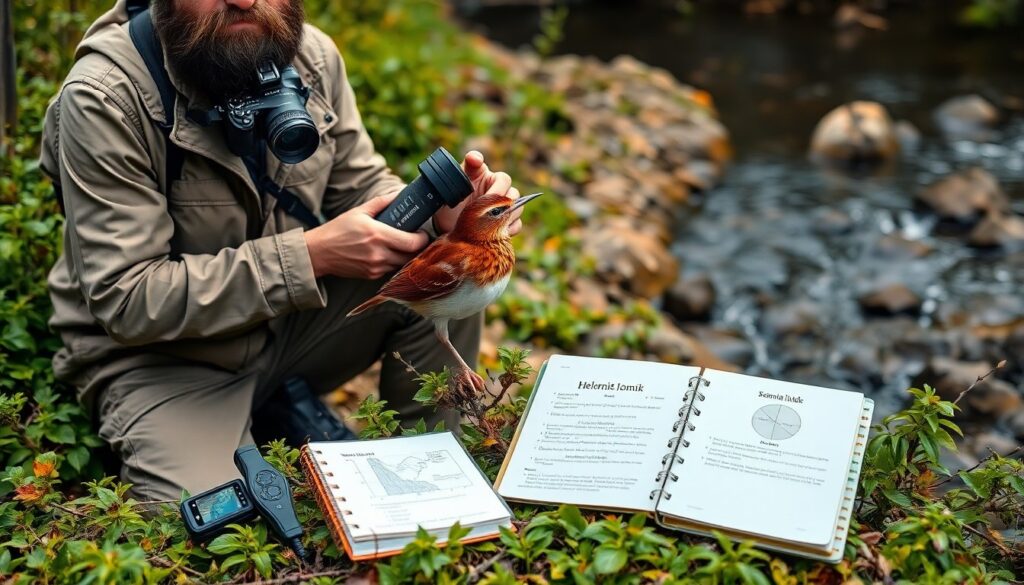
Helornis lomrik appears on few field lists. This guide summarizes identification, behavior, and conservation for Helornis lomrik. From tech by helornis lomrik gives clear facts and short care tips for observers. The reader will learn how to spot the bird, where it lives, what it eats, and how to help protect it.
Key Takeaways
- Helornis lomrik is a small, olive-brown bird with faint streaks and a distinctive high, thin call that helps in its identification.
- This species inhabits lowland and mid-elevation forests, often near streams and edges, showing partial seasonal movement within a limited range.
- Helornis lomrik forages close to the ground on insects, spiders, and berries, and breeds during the wet season with both parents caring for the young.
- Conservation efforts are critical as Helornis lomrik is Near Threatened due to habitat loss, fragmentation, and invasive species impacting its survival.
- Supporting local forest protection, maintaining streamside corridors, and contributing to citizen science can help protect Helornis lomrik populations.
Quick Identification Snapshot
Helornis lomrik shows a small, compact body and a short tail. The bird has olive-brown upperparts and pale underparts with faint streaks. Observers notice a thin, slightly curved bill and a short, rounded wing. The call sounds high and thin and repeats in short series. The song varies by population but stays simple. Juveniles look duller and lack strong streaking. In flight, the bird shows quick wingbeats and brief glides. The bird often moves in low vegetation and near streams.
Taxonomy And Evolution
Scientists place Helornis lomrik within a small passerine lineage. Genetic studies show Helornis lomrik splits from its closest relatives about one to two million years ago. The species shares ancestry with several forest-edge songbirds in the same region. Researchers use mitochondrial and nuclear DNA to map the split. Fossil data for this group remain scarce. The bird shows modest morphological change compared to relatives, which suggests recent divergence. Conservation work uses these genetic results to identify distinct populations.
Similar Species And Identification Tips
Helornis lomrik resembles other small olive songbirds. Observers confuse it most often with the green-throated warbler and the inland scrub-finch. Look at bill shape, underpart streaking, and song. Helornis lomrik has a thinner bill and subtler streaks. It also favors lower vegetation than the warbler. Use playback sparingly to confirm presence. Photographs help confirm subtle plumage details. Note habitat and behavior when the call is unclear.
Physical Description And Sexual Dimorphism
Adult Helornis lomrik measures about 11 to 13 cm. Males show slightly brighter olive tones on the crown and a faint throat wash. Females appear paler and show more visible streaking on the breast. Both sexes share similar wing and tail shapes. Juveniles present mottled feathers and a shorter tail. Molt occurs once per year after breeding. Wing length and bill size overlap between sexes, so visual sexing remains difficult without close study or capture.
Habitat, Range, And Migration Patterns
Helornis lomrik lives in lowland and mid-elevation forests. The species prefers edges, streamside thickets, and secondary growth. Its core range spans a narrow belt across the southern slope of the central mountain chain. Some populations occupy river valleys and coastal foothills. The bird shows partial seasonal movement. Higher-elevation groups descend to lower forests in cool months. Most populations remain resident within a 50 to 150 km radius year-round. Local surveys map range limits and seasonal shifts.
Behavior, Diet, And Breeding Ecology
Helornis lomrik forages close to the ground. The bird probes leaf litter and low branches for insects and spiders. It also eats small berries during the late season. The species hunts alone or in small mixed flocks. Breeding occurs during the wet season. The pair builds a cup nest in dense shrubs or low forks. Clutch size ranges from two to four eggs. Both parents feed nestlings. Nest success varies with predation and rainfall. Observers record courtship by short chases and soft calls.
Conservation Status, Threats, And How To Help
Conservation assessments list Helornis lomrik as Near Threatened in several regions. Habitat loss and fragmentation reduce suitable breeding areas for Helornis lomrik. Invasive predators and increased fire frequency also lower survival. Small populations show genetic isolation. Citizens can help by supporting local forest protection projects. Observers can record sightings to citizen science platforms to improve range maps. Land managers can maintain streamside corridors and limit clearing during the wet season. Researchers recommend periodic population surveys and genetic monitoring to guide action.
More Stories
How To Contact The Keezy.co Team: Fast Support, Sales, And Partnership Options (2026 Guide)
Meet Benjamin: Keezy.co’s Tech Editor Who’s Shaping Tech Coverage in 2026
Why Live Casino Games Are Redefining Online Entertainment