
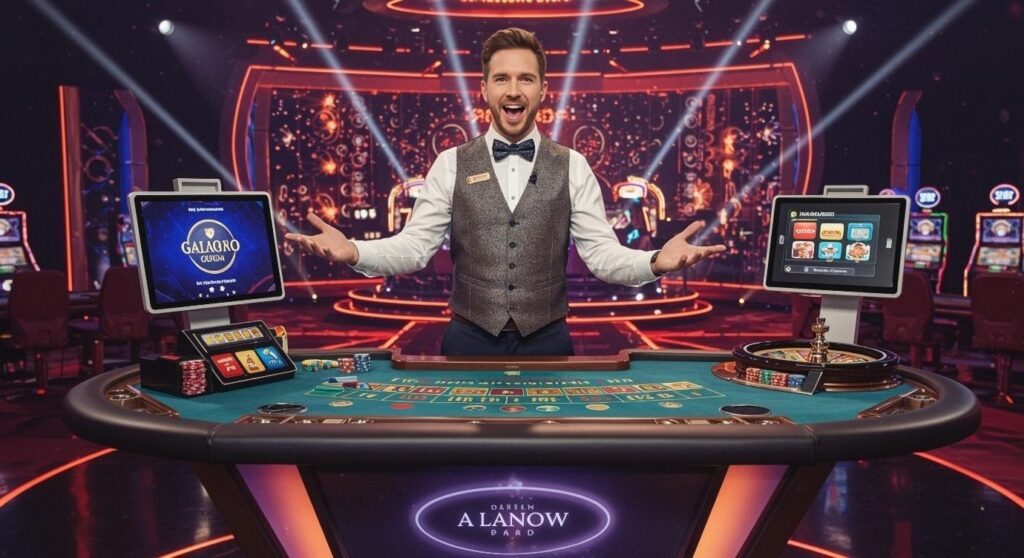
Live casino game shows have carved out their name as a staple in online gaming, with titles like Monopoly Live, Crazy Time, Dream Catcher and Mega Wheel. These games work through real-time betting, letting you join streamed rounds hosted by presenters who manage the pace and play. While many of the core elements are familiar – wheels, multipliers and timed rounds – the format is different from traditional table games.
One of the biggest differences is the presence of a game host instead of a dealer. So, what does a game host actually do, and how does their role differ from a live dealer? Knowing the difference explains how these games work and what to expect when you play.
What game hosts do
Unlike live dealers who handle cards or Roulette wheels, game hosts focus on presenting the game and keeping time. They are responsible for guiding the action, announcing results and keeping things moving. In wheel-based games like Crazy Time or Dream Catcher, the host spins the wheel and interacts with you via live chat, providing commentary on segments or bonus features.
Game hosts work from dedicated studios designed for game show-style broadcasts. Their main job isn’t managing chips or enforcing rules – it’s making sure each round flows smoothly and that you know what’s happening.
Managing the game flow
Game hosts work to a strict schedule built into the game’s mechanics. This includes countdown timers, automated betting periods and results generated by the system. The host provides verbal cues and transitions, telling you when bets are open, when the wheel is spinning and when a result has been determined.
For games with bonus rounds, like Monopoly Live and its 3D animated board, the host connects the main game to these bonus features. They will explain the round, build anticipation and recap what just happened, but the actual outcomes are controlled by the software.
How they differ from live dealers
A live dealer in Blackjack or Roulette controls the physical side of the game – shuffling cards, managing bets on the table and ensuring rules are followed. They often handle customer queries as part of their role and work in a more rules-driven environment.
Game hosts don’t handle funds, resolve disputes or enforce rules. They are there to present and inform. The game logic – payout structures, multipliers, segment probability – is handled by software, not the host.
Interaction and presentation
Game shows are designed for fast pace and consistent presentation. Hosts are often trained performers, chosen for their ability to communicate clearly and stay engaging across rounds. While you can chat with them, responses are typically general due to the high volume of messages.
The format is built for passive interaction. That’s different from table games, where a dealer might respond directly to questions or engage with regular players over time.
—
Remember to always gamble responsibly. Do not bet more than you can afford to lose, and if you feel that gambling is becoming an issue, you can seek help from various trusted organisations.
More Stories
Popular eSports Tournaments in 2026 to Follow from 1Win
Evaluation of the 1xBet Bookmaker
The History of Online Casinos: From Origins to the Present